Two Sisters, Two Rivers, One Vision
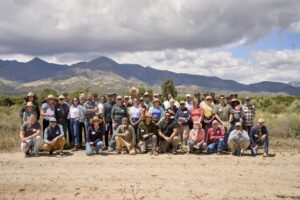
The 87 farmers, scientists, journalists, and friends who joined us for Day One of the field series on May 4,
The Email I Never Expected an Answer To
An unexpected meeting, a better question, and a deeper understanding of the land we call home.
I remember staring at my computer for several minutes before pressing Send.
The email was addressed to Dr. Derek Booth, one of the country’s leading fluvial geomorphologists and one of the principal investigators behind the foundational geomorphic assessment of the Santa Clara River Watershed — research that had become central to our team’s planning for the Rancho Dos Hermanas Mitigation Bank.
I had never met him.
He didn’t know me.
I was simply one of two sisters entrusted with the stewardship of nearly 400 acres where two rivers meet. We were trying to make the best possible decision for the land’s future.
I honestly never expected an answer.
The next morning, my inbox told a very different story.
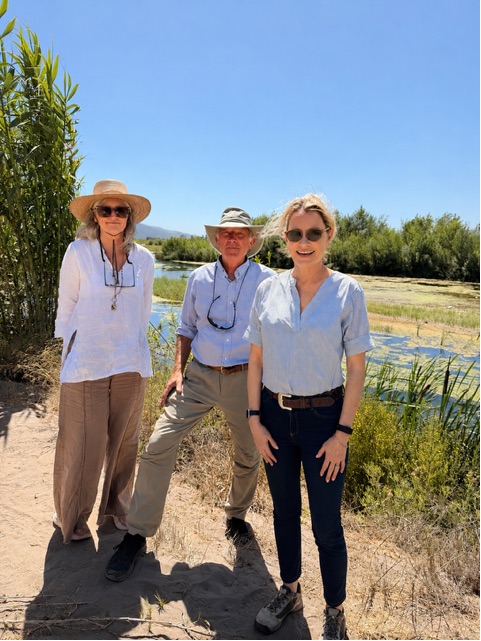
Not only had Derek replied, but he happened to be driving through Fillmore that weekend. He asked if he and his wife, Dr. Stephanie Moret, an environmental scientist, educator, and conservation planner, could stop by Rancho Dos Hermanas.
Sometimes life has a way of reminding you that timing matters.
Six years, two rivers, and one very large question
For nearly six years, my sister Laurie and I have been working to establish a Mitigation Bank at Rancho Dos Hermanas. From the beginning, our vision has been simple: to permanently protect this extraordinary landscape while enhancing its ecological value for generations to come.
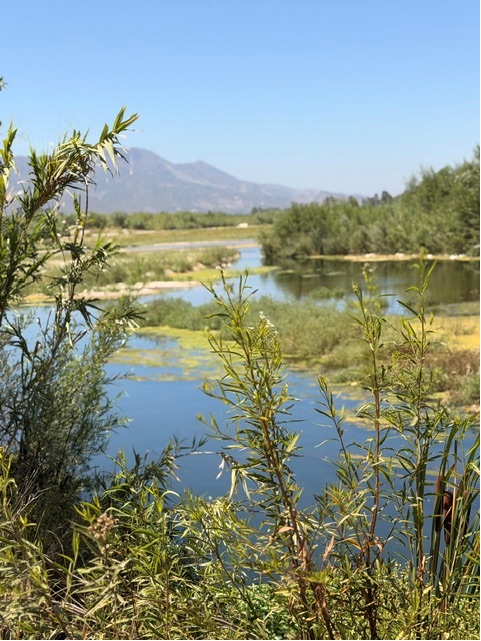
What makes Rancho Dos Hermanas truly unique is its location within the Santa Clara River Watershed. Our ranch is flanked by the Santa Clara River and Sespe Creek, and the two converge here before flowing west to the Pacific.
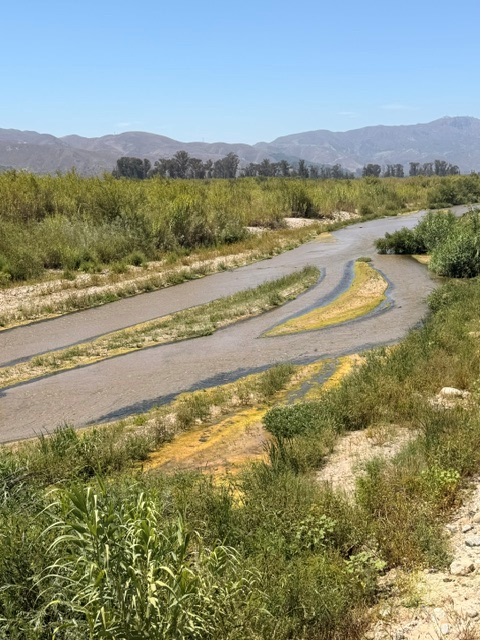
The braided channels of the Santa Clara River illustrate the dynamic nature of a free-flowing river system. Over thousands of years, water, sediment, and seasonal flows have continually shaped this remarkable landscape
A river confluence is far more than a point on a map. It is where two dynamic river systems come together, carrying water, sediment, nutrients, and life from different parts of the watershed — creating the rich mosaic of habitats that makes Rancho Dos Hermanas so ecologically significant today.
It is why every stewardship decision we make carries long-term significance.
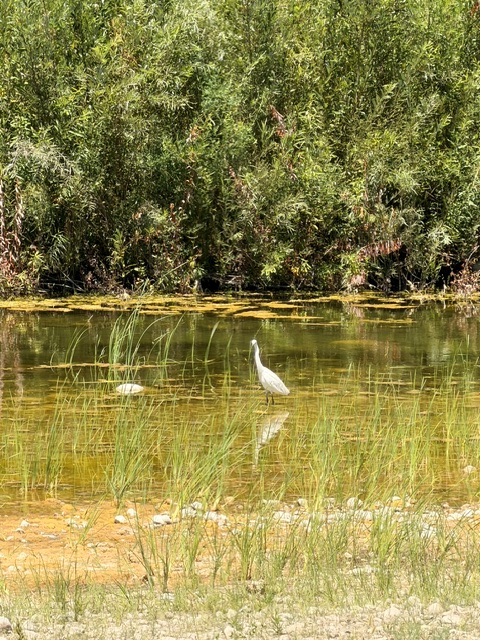
One of the most important areas of our proposed mitigation bank is approximately 70 acres of wetland habitat — the ranch’s former watercress beds. Although they are no longer farmed, nature has transformed them into thriving habitat for native plants and endangered wildlife.
When we began this journey, we hired Leatherman BioConsulting to conduct a year-long biological survey of the ranch. Adam DeLuna and his team documented an extraordinary diversity of native plants and wildlife, confirming what Laurie and I had begun to realize ourselves:
This landscape had become far more than agricultural land.
It had become an important ecological resource worthy of long-term protection.
As our planning progressed, we found ourselves facing one of the most important decisions of the entire project.
Do we protect the berm?
Or do we step back and allow nature to take its course?
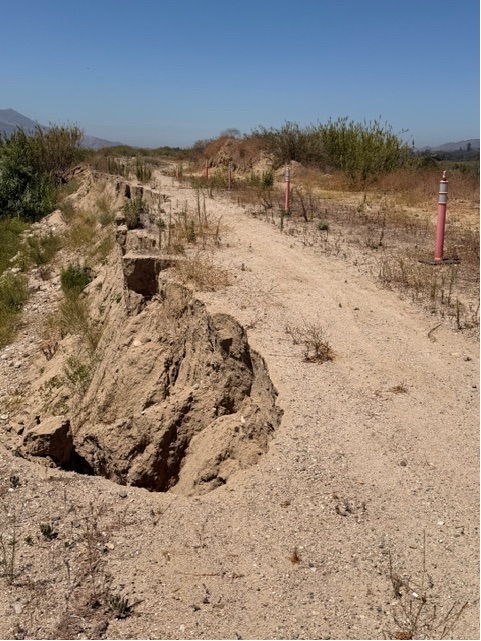
The berm separates portions of the former watercress beds from the river’s floodplain. As the Santa Clara River naturally migrates, portions of the berm continue to erode. Any decision to modify it — or leave it alone — could influence the future ecology of this landscape.
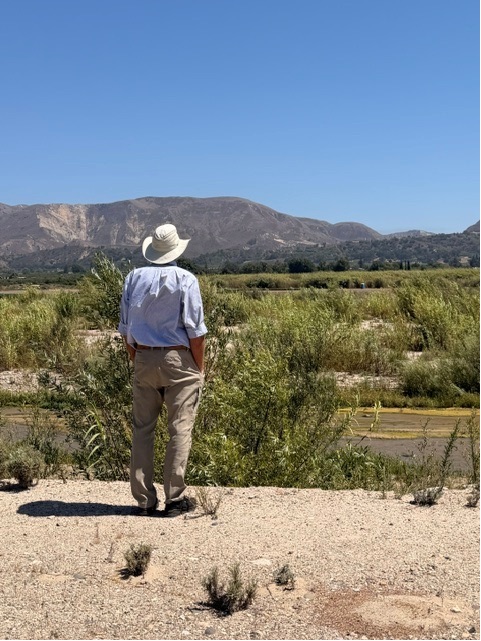
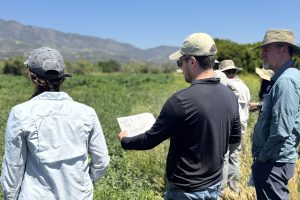
For more than two hours, Derek and Stephanie walked the ranch with me.
Derek brought decades of expertise in fluvial geomorphology and the Santa Clara River Watershed, while Stephanie’s work in habitat, sustainability, and ecological systems added another valuable perspective to our conversations.
Together, we explored the wetland habitat, studied the braided channels of the Santa Clara River, examined areas of natural erosion, and discussed how healthy river systems and habitats evolve together.
What stayed with me wasn’t just what Derek and Stephanie knew.
It was how generously they shared it.
There was no rush.
Every few hundred yards Derek would stop, quietly studying the landscape before pointing out something I had never noticed. Gravel bars. Ancient terraces. Subtle changes in elevation. Places Laurie and I had walked countless times suddenly revealed a much larger story.
The landscape hadn’t changed.
But the way we saw it had.
As we discussed the berm, Derek offered a perspective that immediately resonated with us. Rather than focusing solely on protecting the berm itself, he encouraged us to think about what level of natural river migration is appropriate to achieve the long-term ecological objectives of the mitigation bank.
It wasn’t a dramatic shift.
It was simply a better way of framing the question.
He also encouraged us to wait.
Rather than rushing into an irreversible decision, Derek suggested we let another winter storm season unfold and see what the river had to teach us. With the potential for a significant storm season ahead, there was value in observing how the river naturally responds before deciding on the best long-term course of action.
It was thoughtful advice.
And it made perfect sense
As Derek and Stephanie drove away that afternoon, I stood quietly overlooking the floodplain.
I found myself thinking about my dad.
He loved this ranch long before anyone talked about mitigation banks, floodplain connectivity, or fluvial geomorphology. He simply believed in caring for the land and leaving it better than you found it.
Then I thought about the day itself.
An email I was certain would disappear into cyberspace. An answer the next morning. Two strangers who happened to be passing through Fillmore, and who gave us an afternoon and the confidence to slow down before making an important decision.
What are the chances?
I’d be lying if I said I didn’t wonder whether my dad had a little something to do with it.
Maybe he did.
Maybe he didn’t.
But moments like that remind me that sometimes the right people seem to show up at exactly the right time.
For me, that’s enough.
Dr. Derek Booth is a geologist and geomorphologist whose career spans public agencies, academia, and private practice. He is now retired from UC Santa Barbara, where he was an adjunct professor at the Bren School of Environmental Science & Management, and he remains an affiliate professor at the University of Washington, where he earned his Ph.D. in geological sciences. He served as president of Stillwater Sciences and as senior editor of the journal Quaternary Research.
Dr. Stephanie Moret is an environmental scientist, educator, and conservation planner whose work focuses on wetland habitat, sustainability, and ecological systems.
Tina Thomson and her sister Laurie Smith are the second-generation stewards of Rancho Dos Hermanas, a family ranch in Fillmore, California.

The 87 farmers, scientists, journalists, and friends who joined us for Day One of the field series on May 4,

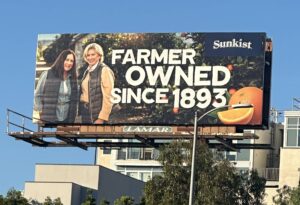
We got a call from Sunkist. Then we looked up and saw ourselves on a Hollywood billboard. We are still

It’s been a full and fruitful week at Rancho Dos Hermanas! We’re happy to share that our Valencia orange harvest is

Last week marked a significant step forward for Rancho Dos Hermanas—we officially hosted the Interagency Review Team (IRT) for a